The public has several ways to provide input on the proposed acquisitions. There will be a virtual public meeting on
Tuesday, October 15th, 2024. You may also submit public testimony to the Fish and Wildlife Commission or provide comments on-line (see links below).
| DATE |
MEETING |
Additional Information |
| October 15, 2024, 6-7:30 pm |
Public Meeting |
Meeting presentation (pdf) |
| Through November 1, 2024 |
Comment on-line |
https://odfw.wufoo.com/forms/proposed-property-acquisition/ |
| December 13, 2024 |
Fish and Wildlife Commission |
At ODFW’s Headquarters office (4034 Fairview Industrial Drive, SE, Salem, OR 97302) and on YouTube. As date approaches see https://www.dfw.state.or.us/agency/commission/minutes/ for link and meeting materials. |
| By December 31, 2024 |
|
ODFW anticipates acquiring South Coyote V by December 31, 2024 and acquiring South Coyote IV and VI by September 30, 2025. |
| |
|
| |
|
| |
Context maps for South Coyote IV, V and VI. Click to enlarge. |
| |
|
| |
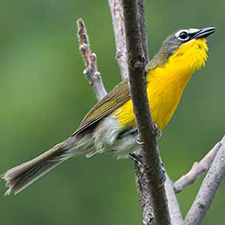
Yellow-breasted Chat (Photo credit: Kelly Colgan Azar, Flickr) |
Could the public visit South Coyote IV, V or VI?
Yes! The properties would be integrated into the Fern Ridge Wildlife Area’s South Coyote Unit and be subject to the same rules and restrictions administered by ODFW.
What activities would be allowed at South Coyote IV, V or VI?
Any activities that are allowed on the South Coyote Unit of Fern Ridge Wildlife Area, including hunting, wildlife viewing and educational opportunities, would be allowed on these properties.
How will these sites be managed?
Oregon Department of Fish and Wildlife staff would write a land management plan for all three sites to describe planned management activities over the next 10 years. The public will have an opportunity to review and comment on the draft land management plans. It is anticipated that efforts at all three properties would focus on restoring wetland and riparian and flowing water habitats for plants and animals such as migrating waterfowl including dusky Canada goose, northern red-legged frog, northwestern pond turtle, willow flycatcher, yellow-breasted chat, tufted hairgrass, meadow checker mallow, brodiaea, milkweed, camas, and western buttercup. Habitat enhancement would include control of non-native vegetation including reed canary grass, blackberry, thistles and non-native pasture grasses, and establishment of native vegetation.
Will Oregon Department of Fish and Wildlife pay property taxes after acquisition?
Yes. It is the policy of the Department to pay in-lieu of taxes after property acquisition.
Where can I find out more information about the Willamette Wildlife Mitigation Program?
Visit the WWMP website:
https://www.dfw.state.or.us/habitat/WWMP/index.asp
Download this FAQ (pdf)
Download the Fact Sheet (pdf)
If you have additional questions or would like to discuss any of the projects further, please contact:
Laura Tesler –Willamette Wildlife Mitigation Program Coordinator
Oregon Department of Fish and Wildlife
541-799-4556
laura.l.tesler@odfw.oregon.gov